
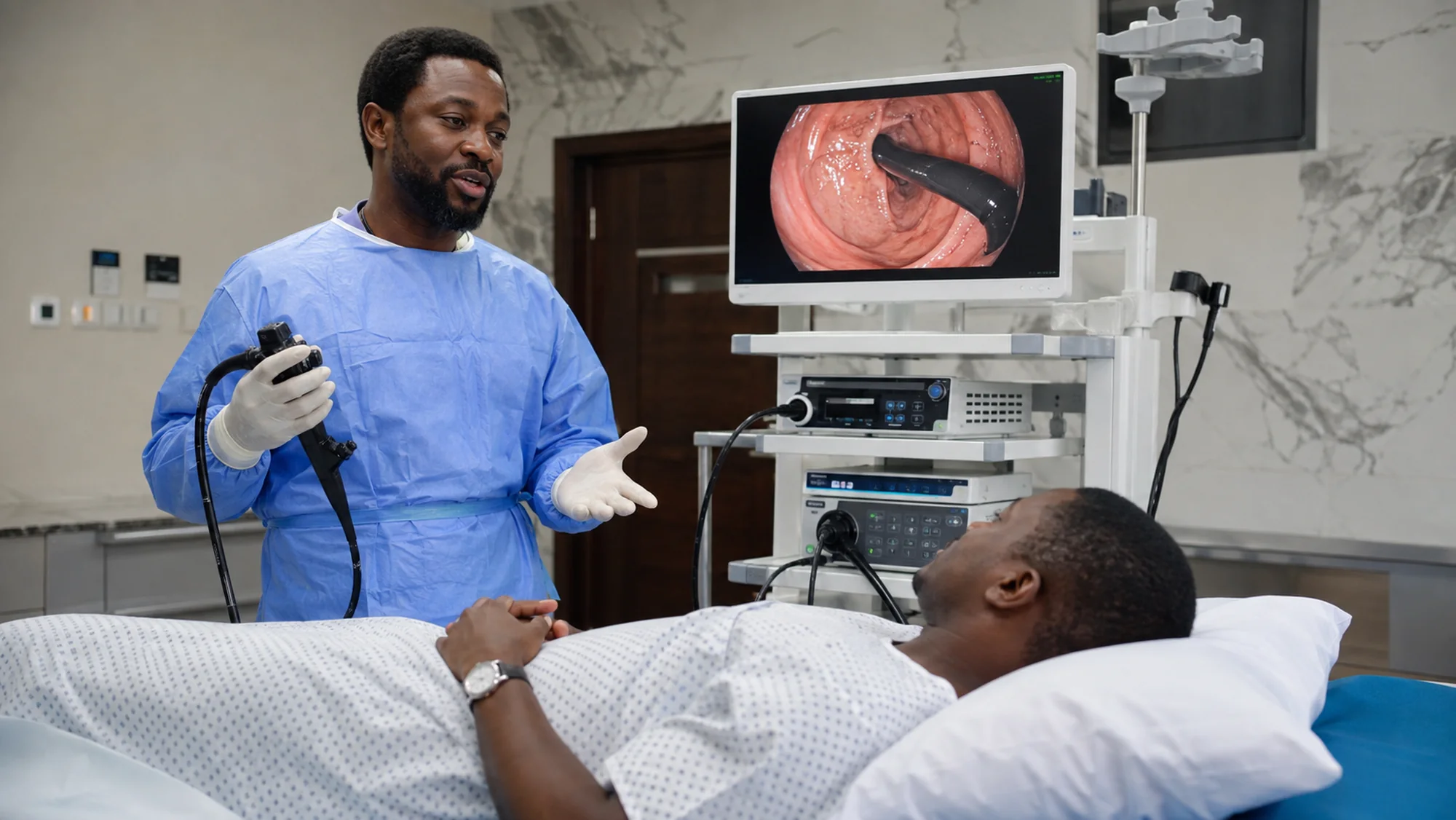
Digestive symptoms are easy to ignore and easier to self-medicate. Antacids from a pharmacy counter, a change of diet, waiting to see if it settles. Often that is reasonable. Sometimes it delays the one investigation that would have answered the question in an hour.
Endoscopy lets a specialist see directly inside your digestive tract, take samples, and frequently treat what they find in the same procedure. This guide covers the symptoms that warrant it, the range of procedures available, and what actually happens on the day.
Symptoms that deserve a closer look
Any of the following, if persistent, is a reason to stop managing symptoms and start investigating causes.
- Heartburn or reflux that returns despite regular medication.
- Difficulty or pain when swallowing, or a sensation of food sticking.
- Persistent upper abdominal pain, bloating, or feeling full very early in a meal.
- Unexplained weight loss or sustained loss of appetite.
- Blood in vomit, black tarry stools, or visible blood in stool.
- Unexplained anaemia, particularly iron deficiency in adults.
- A significant change in bowel habit lasting more than a few weeks.
- A family history of gastrointestinal cancer or polyps.
The range of procedures
Endoscopy is not one procedure but a family of them, each reaching a different part of the digestive system.
- Gastroscopy (upper GI endoscopy): examines the oesophagus, stomach and first part of the small intestine.
- Colonoscopy: examines the full length of the large bowel.
- Sigmoidoscopy: examines the lower portion of the large bowel, a shorter procedure with lighter preparation.
- Endoscopic ultrasound (EUS): combines endoscopy with ultrasound imaging to assess structures beyond the bowel wall, including the pancreas.
- ERCP: endoscopic retrograde cholangiopancreatography, used to investigate and treat problems in the bile and pancreatic ducts, including gallstones causing obstruction.
- Capsule endoscopy: a swallowed camera capsule images the small intestine, an area conventional scopes reach poorly.
- Therapeutic endoscopy: treatment during the same procedure, including stopping bleeding, dilating narrowed segments and placing stents.
- Polypectomy: removal of polyps, which can reduce future colorectal cancer risk when appropriate lesions are found and removed.
- Foreign body removal: retrieval of swallowed objects.
- Biopsy procedures: tissue samples taken during the procedure for laboratory analysis when clinically indicated.
Life Centre Medicals coordinates access to specialist endoscopy pathways and can guide the laboratory follow-up required when samples or biopsies are taken.
Preparation, by procedure
Preparation is not a formality. An incomplete preparation means an incomplete view, which can mean repeating the whole procedure.
For a gastroscopy, you will typically fast for six to eight hours beforehand so the stomach is empty. Small sips of water may be permitted up to a couple of hours before, according to the instruction you are given.
For a colonoscopy, bowel preparation involves a prescribed laxative regimen and a restricted diet in the day or days before. It is the least pleasant part of the process and the most important. A poorly prepared bowel hides exactly the small lesions the procedure exists to find.
Tell the team about blood thinners, diabetes medication and any implanted devices well in advance, since some require a planned adjustment before the procedure.
What happens on the day
- 01
You are checked in, consent is confirmed, and your medication and allergy history is reviewed.
- 02
Sedation may be used depending on the procedure and clinical plan. The team will explain what applies before the appointment.
- 03
The procedure itself usually takes between fifteen and forty-five minutes depending on type and findings.
- 04
Biopsies or treatment are performed during the same session where indicated.
- 05
You recover for a short period while sedation wears off.
- 06
Initial findings are discussed with you, with laboratory results on any biopsies following separately.
If sedation is used, you will receive specific recovery and transport instructions. Follow the procedure team’s advice about driving, work and other activities afterwards.
Why earlier beats later
Most endoscopy findings are benign and straightforward to treat: gastritis, ulcers, reflux damage, benign polyps. Patients frequently leave with a clear explanation and a treatment that works, having spent months guessing.
Some colorectal cancers develop through precursor polyps over time. Finding and removing appropriate polyps during colonoscopy can reduce future colorectal cancer risk, which is one reason screening may be recommended for eligible people.
The age and method for colorectal screening vary by guideline, individual risk, family history and symptoms. If you are unsure whether screening applies to you, discuss your own risk with a qualified clinician.


