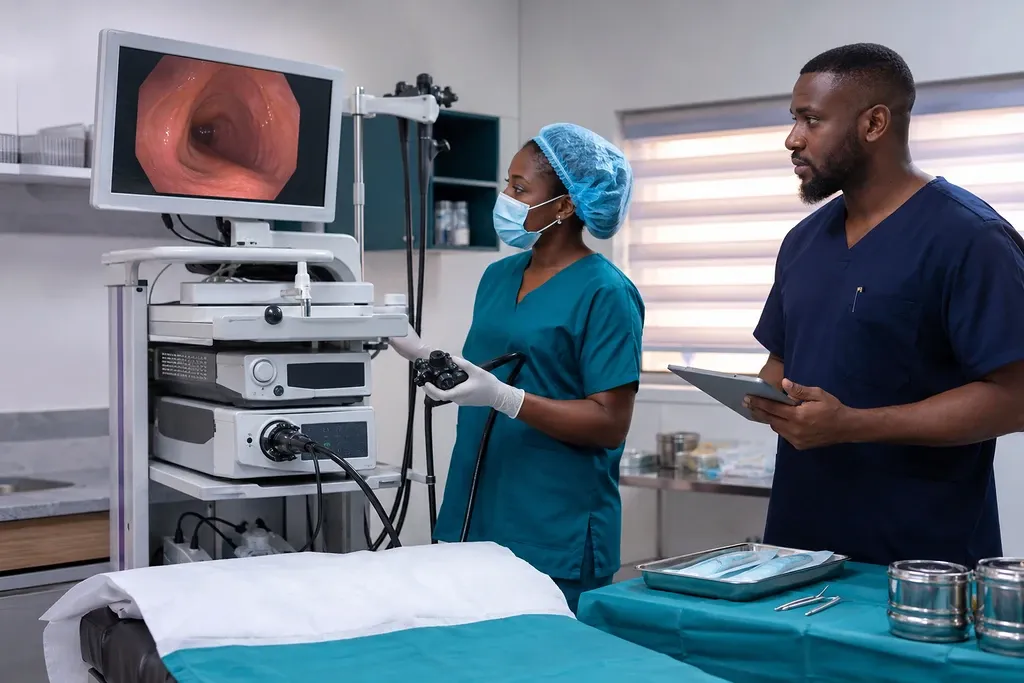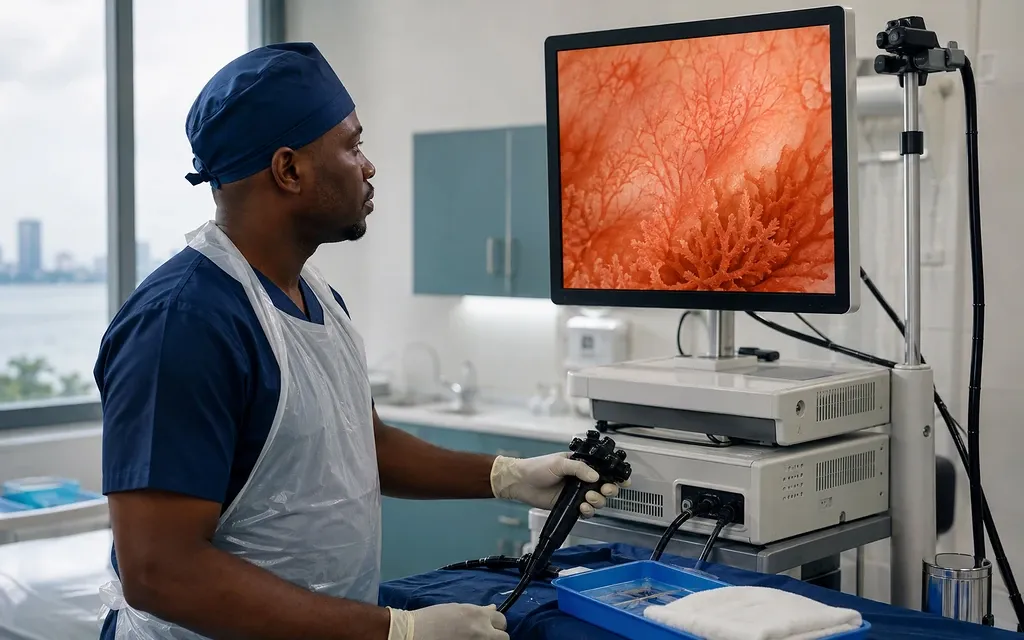


Gastroscopy, also called upper gastrointestinal endoscopy, uses a thin flexible camera to examine the oesophagus, stomach and the first part of the small intestine. A clinician may recommend it to investigate symptoms, assess a known condition, take a tissue sample or carry out a treatment.
The appointment is easier to plan when you know the fasting instructions, what to do about regular medicines and whether throat spray or sedation is planned. Those details vary, so the instructions from your own endoscopy service take priority over general guidance.
What a gastroscopy examines
The endoscope passes through the mouth and throat to view the oesophagus, stomach and upper small intestine. The image helps a specialist look for inflammation, ulcers, bleeding, narrowing or another finding that may explain symptoms. Sometimes the procedure also allows treatment.
A small biopsy may be taken for laboratory analysis. Taking a sample does not by itself mean the clinician has found cancer; tissue can be checked for many reasons, including inflammation or infection. If a sample is taken, ask how its result will be reported.
Get the fasting instructions in writing
Your appointment letter or endoscopy team should specify when to stop eating and drinking. Fasting reduces the chance that food or fluid in the stomach creates a problem during the procedure. The permitted timing for plain water may differ by service, sedation plan and clinical circumstances.
Do not rely on a fasting period from a friend, an old appointment letter or an online article. If your appointment time changes, ask whether the fasting plan changes too. If you accidentally eat or drink after the cut-off, tell staff honestly; they will decide whether it is safe to proceed or whether the appointment needs another plan.
Review medicines before the day
Tell the team about all prescription medicines, over-the-counter drugs, injections, supplements and herbal preparations. Blood thinners may matter if a biopsy or treatment is planned. Diabetes medicines and insulin may need a specific plan during fasting. Medicines that affect stomach emptying, iron or allergy treatment may also be relevant to the clinician's assessment.
Never stop a blood thinner, insulin, blood-pressure medicine or another prescription on your own. Ask the clinician who prescribed it or the endoscopy team what to do and when to restart it. If you have not received instructions for a medicine that could affect bleeding or blood sugar, contact the service in advance.
Mention pregnancy or a possibility of pregnancy, allergies to medicines, prior reactions to sedation, sleep apnoea, breathing or heart conditions and any recent illness.
Know what may happen during the procedure
Staff usually review your history and explain the procedure before asking for consent. Depending on the service and your circumstances, comfort options may include local anaesthetic spray to numb the throat or sedation to help you relax. Ask what will be used and what you should expect; not every patient receives the same option.
A gastroscope is passed gently through the mouth into the upper digestive tract. Air may be used to open the area for a clearer view, which can cause temporary fullness or belching. You can discuss concerns, questions and how to communicate discomfort with the team before starting.
If sedation is used, monitoring and recovery time are part of the appointment. Ask whether someone needs to escort you home and what restrictions apply after discharge.
Plan for recovery and results
Follow the discharge instructions about when to eat and drink, especially if throat spray has been used. If you received sedation, follow the centre's advice about driving, operating machinery, alcohol, work and important decisions. Arrange the support that the team says you need rather than deciding based only on how alert you feel.
The specialist may explain the visual findings after the procedure. A biopsy or laboratory test can take longer. Before leaving, ask who will contact you, how to receive the report, when to expect follow-up and what symptoms should prompt urgent care.
If you develop severe chest or abdominal pain, vomiting blood, black stool, fever, breathing difficulty or another symptom listed in your discharge advice, seek urgent medical help and use the contact route supplied by the service.