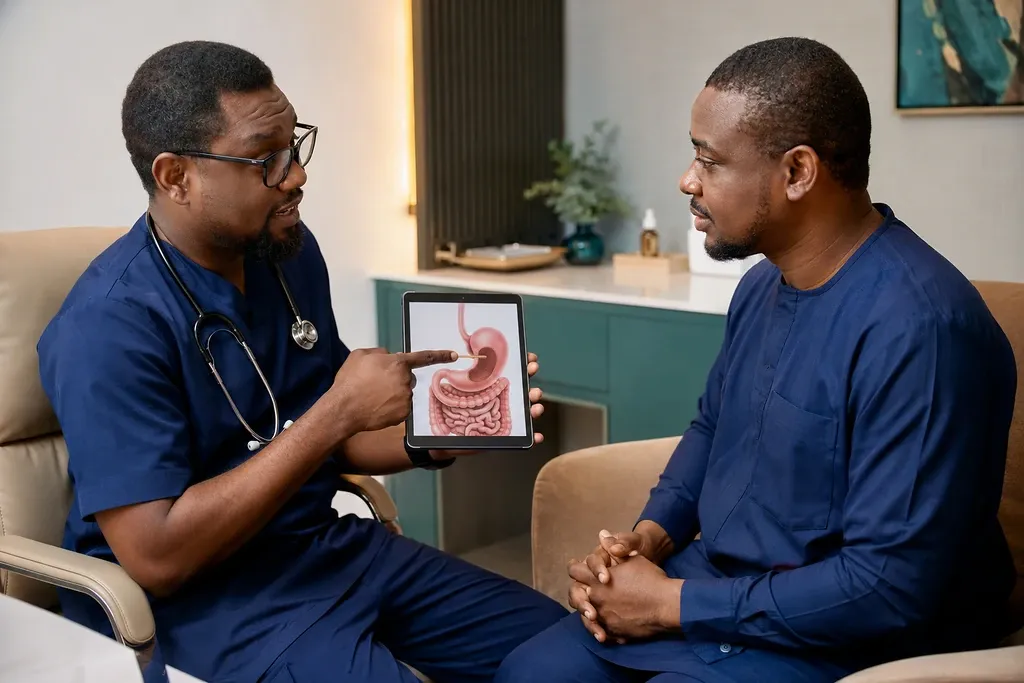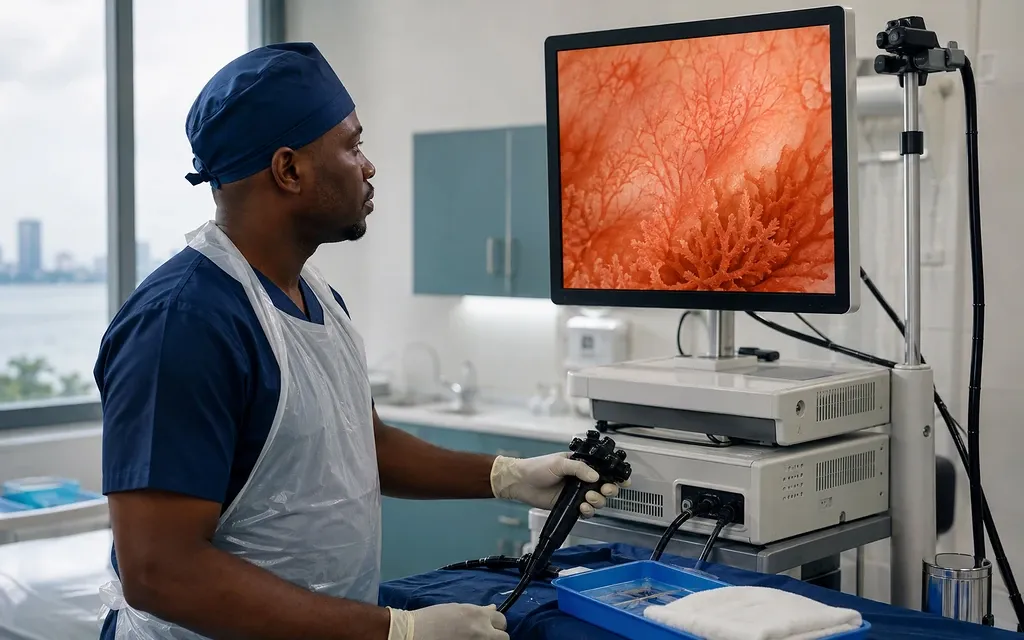

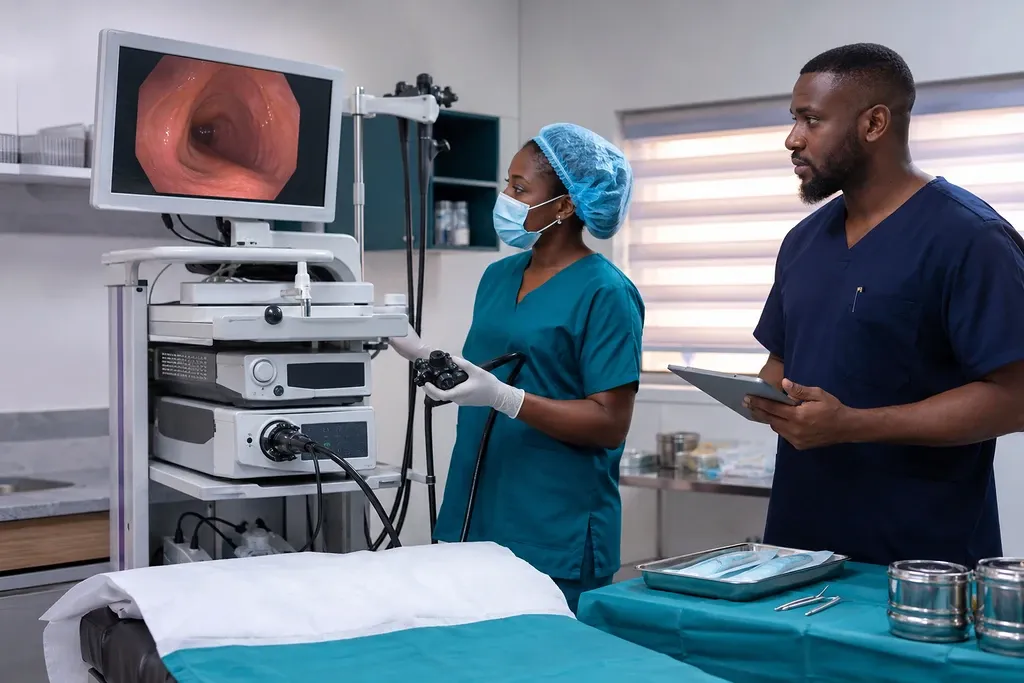
A biopsy is a small tissue sample taken so it can be examined in a laboratory. During gastroscopy or colonoscopy, a specialist may take one when the lining needs closer assessment or when a specific test is needed. The sample is usually small, and the person often does not feel the sampling itself.
Hearing that a biopsy was taken can be worrying, but it does not automatically mean that the clinician suspects cancer. Samples are used to investigate many conditions. This guide explains why they are taken, how results differ from the immediate procedure report and what to ask before you leave.
Why a specialist may take a sample
The appearance of the gut lining can guide the endoscopist, but it cannot always identify the cause of a change with certainty. A tissue sample lets a pathologist examine cells under a microscope. Depending on the clinical question, the sample may be checked for inflammation, infection, cellular changes, coeliac disease, a polyp's type or another condition.
A biopsy may also be taken from an area that looks normal when the test request asks for specific sampling. The number and location of samples depend on the procedure and clinical indication. The specialist should explain the plan and obtain consent for the procedure and any relevant intervention.
Taking a biopsy is common in diagnostic endoscopy and is not a statement that cancer has been found. The result provides additional information that must be interpreted with symptoms, examination, imaging and previous results.
What happens to the sample
The tissue is placed in a labelled container and sent through the laboratory's specimen pathway. Staff document where it came from and what the clinician wants the laboratory to assess. Accurate labelling and clinical details help the pathologist interpret the sample in context.
The laboratory processes the tissue into thin sections, applies stains and examines it under a microscope. Some requests require special stains, additional tests or review by another specialist. These steps take time, which is why the final report may arrive after the endoscopy report.
The exact turnaround depends on the sample, the tests requested and the laboratory workflow. Ask for an estimated time and a direct route for follow-up rather than relying on a time quoted for a different patient or procedure.
The procedure report and biopsy report are different
The endoscopy report describes what the specialist saw and any treatment performed. The biopsy report describes the laboratory's examination of the tissue. A preliminary conversation after the procedure may explain the visual findings, but it cannot replace a pathology result that is still being processed.
The two reports are considered together. A clinician may explain that the sample is benign, inflammatory, infectious, precancerous or another category, but the exact terms and follow-up depend on the result and your situation. If further testing is needed, ask what question it is intended to answer.
If a sample was taken, agree who will receive the result: you, the referring clinician or another authorised person. Confirm whether you need to book a follow-up appointment or whether the service will contact you.
What to ask before leaving
- Was a biopsy taken, and from which area?
- What is the expected result timeframe?
- Who will receive the report and who will explain it to me?
- Should I make a follow-up appointment now?
- Which symptoms after this procedure need urgent attention?
- Whom should I call if I have not received the result by the expected date?
Write the answers down, especially if you received sedation or feel tired. A family member or support person can help you remember the instructions if the service permits them to be present.
Aftercare and getting help
Follow the written instructions for food, drink, activity and medicines. Small biopsies are usually taken through the endoscope, but the care team will tell you about any specific precautions related to your procedure or treatment.
Contact the endoscopy service using its discharge number if you have a concern. Seek urgent assessment for heavy bleeding, severe or worsening abdominal or chest pain, fever, repeated vomiting, fainting or any emergency symptom identified in your own discharge instructions.
We coordinate endoscopy through a specialist pathway and can explain how enquiries, reports and follow-up are arranged. Your endoscopy team remains the right contact for a question about your individual biopsy or result.