
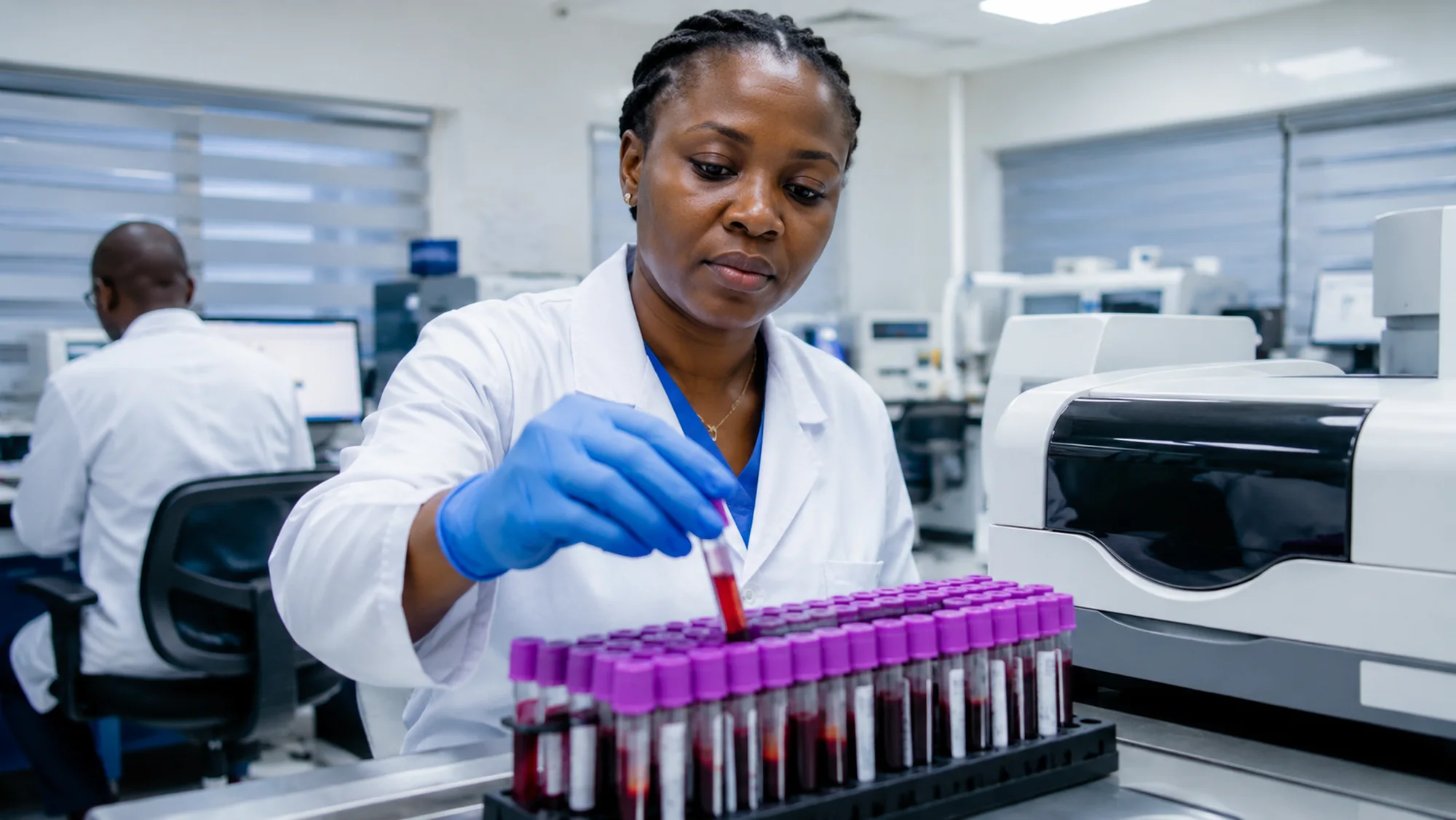
Every safe transfusion in Lagos begins long before blood reaches a patient. It begins in a laboratory, where screening quietly decides whether a unit of blood can be trusted.
Blood screening is part of the wider safety system used before donated blood is released for transfusion. It helps identify required infection markers, supports blood-group compatibility, and reduces avoidable transfusion risk alongside donor assessment, quality systems and clinical controls.
What screening actually checks
A screening pathway works through several layers, each answering a different question.
- 01
Donor assessment. Before any needle, a donor is assessed for eligibility: recent illness, medication, travel, and general fitness to donate safely.
- 02
Blood grouping. The ABO group and Rhesus status are confirmed, then confirmed again against the unit itself.
- 03
Infectious disease markers. Testing follows the applicable blood service protocol and may include markers such as HIV, hepatitis B, hepatitis C and syphilis.
- 04
Documentation. Every result is recorded against the unit so that any transfused blood can be traced back through its full history.
Release and handling decisions follow the applicable blood service protocol. Reactive screening results require the defined follow-up and blood-safety pathway.
Why screening protects three people at once
The recipient is the obvious beneficiary. Appropriate grouping, compatibility processes and infection-marker screening reduce avoidable transfusion risks.
The donor can also benefit when a screening programme identifies a reactive marker that they did not previously know about. The appropriate next step depends on the marker, the screening method and the programme’s confirmatory and referral pathway.
The clinician benefits third. Reliable screening and traceable documentation reduce avoidable uncertainty when a transfusion decision is being made.
What our Lagos State partnership changes
Life Centre Medicals has signed a strategic partnership with the Lagos State Blood Transfusion Committee, an initiative of the Lagos State Government. Blood screening services approved under that partnership are available at Alimosho General Hospital.
The partnership creates a formal pathway for coordinated blood-screening services with the Lagos State Blood Transfusion Committee and supports wider access through agreed programme locations. The exact tests, protocols and reporting requirements depend on the applicable screening programme.
Screening beyond the blood bank
The same tests that make donated blood safe are useful in other contexts, and people request them for reasons that have nothing to do with transfusion.
- Pre-marital screening, where couples check genotype, blood group and infectious disease status together.
- Pre-employment medicals, where infectious disease status forms part of a fitness-to-work assessment.
- Antenatal care, where blood group, Rhesus status and infection screening are all routine.
- Personal health checks, where someone simply wants to know their status confidentially.
Testing is handled confidentially. If you have a specific privacy or result-release requirement, confirm it with the team before testing so the appropriate process can be agreed.
How to arrange screening
Individuals can contact the team, book online, visit a Lagos branch or request home or office collection where suitable. Hospitals, blood banks and organisations running drives should contact the team so scope, logistics and reporting can be agreed in advance.
For programmes outside Lagos, ask the corporate team whether coordinated collection is possible for the location, participant numbers and test scope.


