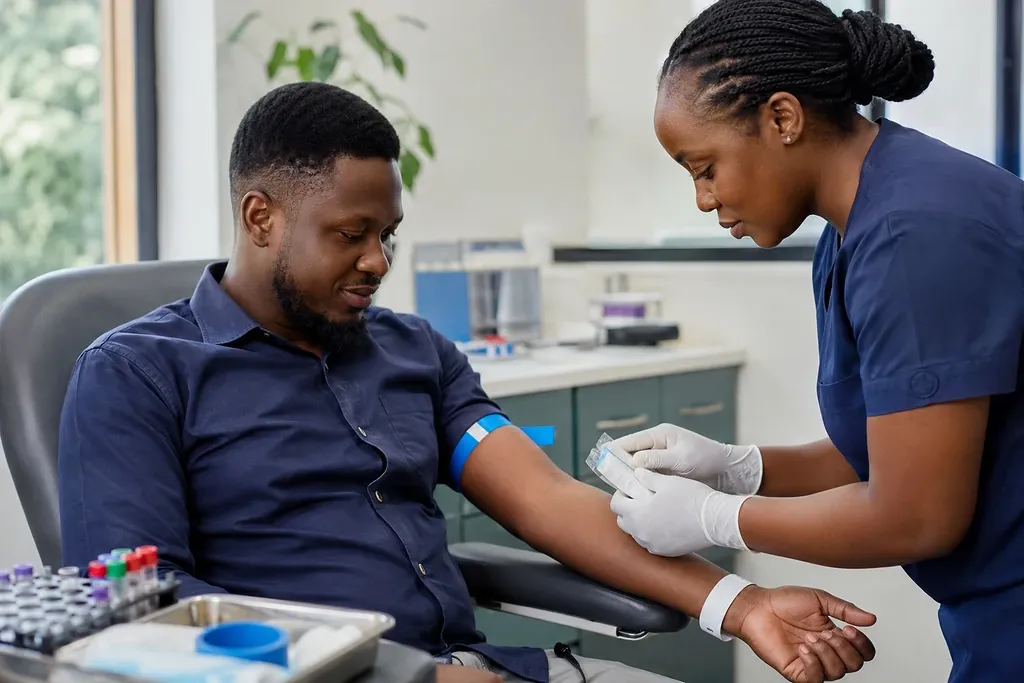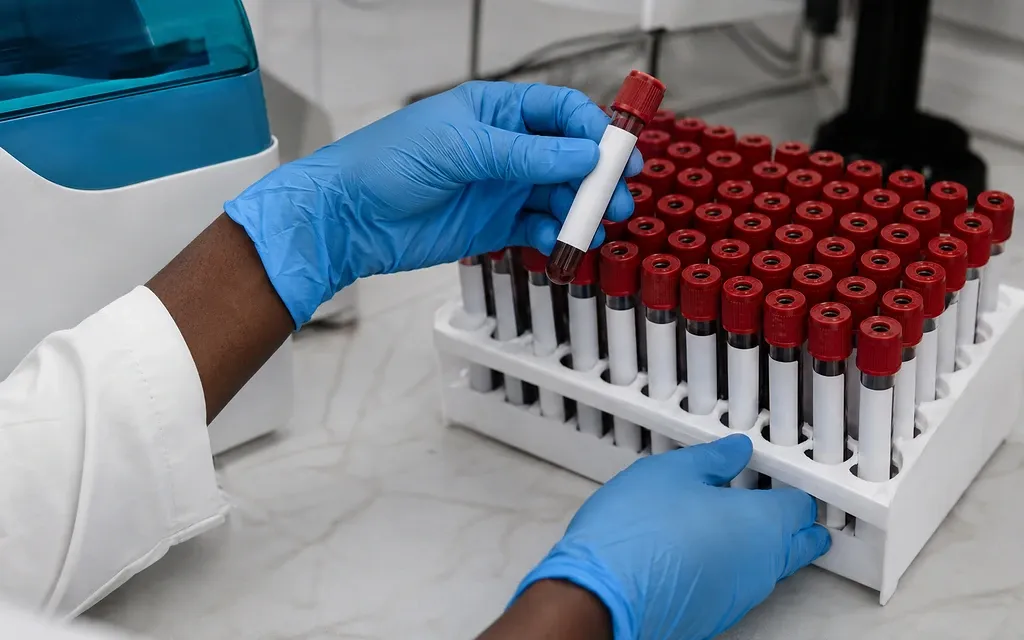

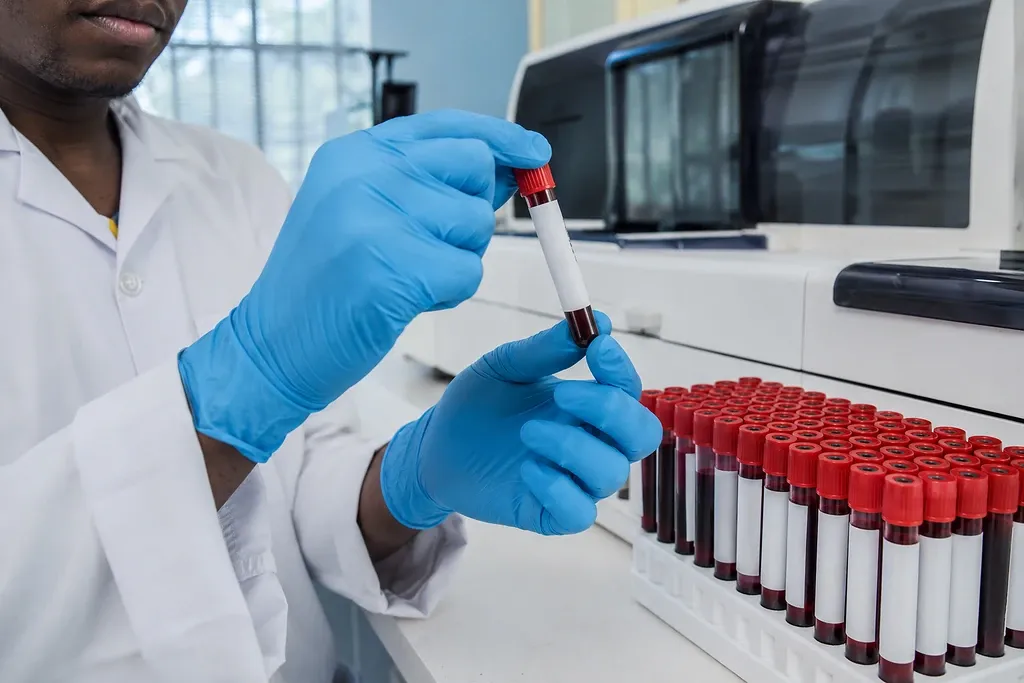
Safe blood depends on a connected process, not on one laboratory test. A blood service assesses donors, collects and identifies the sample correctly, screens each donation for important infections, and follows a controlled route for blood grouping and compatibility before a unit is used.
The exact local procedure follows the responsible blood-service protocol. This guide explains the main checks in plain language and how our partnership with the Lagos State Blood Transfusion Committee fits into the screening pathway.
The donor assessment comes before the laboratory tests
Before donation, trained staff ask questions about a donor's health and circumstances and check whether donation is suitable that day. The aim is to protect both the donor and the person who may receive the blood. Donor selection criteria are set by the responsible blood service and can include temporary reasons to defer a donation.
The assessment is not a judgment about a person. It is a safety step. Donors should answer questions honestly, mention recent illness, medicines, travel or procedures when asked, and follow the staff member's instructions. If a person is not eligible to donate on a particular day, the service can explain whether and when a future donation may be possible.
Accurate identification is just as important. The donation and its accompanying sample must be linked correctly through the service's documented process. This is one reason a donor should not label or transfer samples independently.
What infection screening checks
WHO recommends screening all donated blood for transfusion-transmissible infections, including HIV, hepatitis B, hepatitis C and syphilis. National blood services determine the approved assays, quality controls, sample handling and release pathway used in their setting.
These tests look for specific infection markers or genetic material, depending on the assay. The test used for a donation is chosen for blood-service safety; it may not be identical to the test a clinician requests to investigate symptoms or to establish an individual's current diagnosis.
Screening programmes also rely on quality assurance: trained staff, validated methods, correctly stored reagents, internal checks, documentation and a plan for results that need further review. A result is only useful when the sample and the process behind it can be trusted.
What a reactive screening result means
A result reported as reactive or requiring follow-up means that the initial screen has detected a signal that must be handled under the service's protocol. It does not tell you, on its own, the full clinical meaning of the result. Some screening results require a separate confirmatory test, repeat sample or review by an authorised service.
Blood services have procedures for units that do not meet their release criteria. Donors should use the confidential contact and follow-up pathway provided by the service, rather than trying to interpret a single screening line or result online. If the service refers you for further testing, ask which test is being offered, when it will be available and who can discuss it with you.
A non-reactive screen is also interpreted within the relevant protocol. No single test detects every infection immediately after exposure, so donor-history questions and the full safety system remain important.
Blood group and compatibility are separate checks
Blood grouping identifies characteristics such as ABO and Rhesus type. Compatibility testing compares the donor unit with the intended recipient's blood using the clinical and laboratory checks required for that transfusion. Knowing a person's blood group is useful, but it does not replace the compatibility checks made for a specific transfusion.
The treating team decides whether a transfusion is needed and the blood service prepares the component. A patient or family member should not assume that a donor's stated group alone makes a unit suitable. Hospitals use their established transfusion procedures to match the product to the recipient and the clinical need.
How to ask about the right screening route
Blood donor screening, personal HIV or hepatitis testing, blood group and genotype testing, and hospital compatibility testing are related topics but they are not interchangeable services. When you enquire, explain whether you want to donate, need an individual test, are arranging a group screening or have a clinician's request.
We work with the Lagos State Blood Transfusion Committee on blood-screening services. Contact us to confirm which pathway applies to your request. We can explain the available service, sample requirements and how results or follow-up are handled before you attend.